
What Is Bare Bright Copper? A Scrapper’s Guide
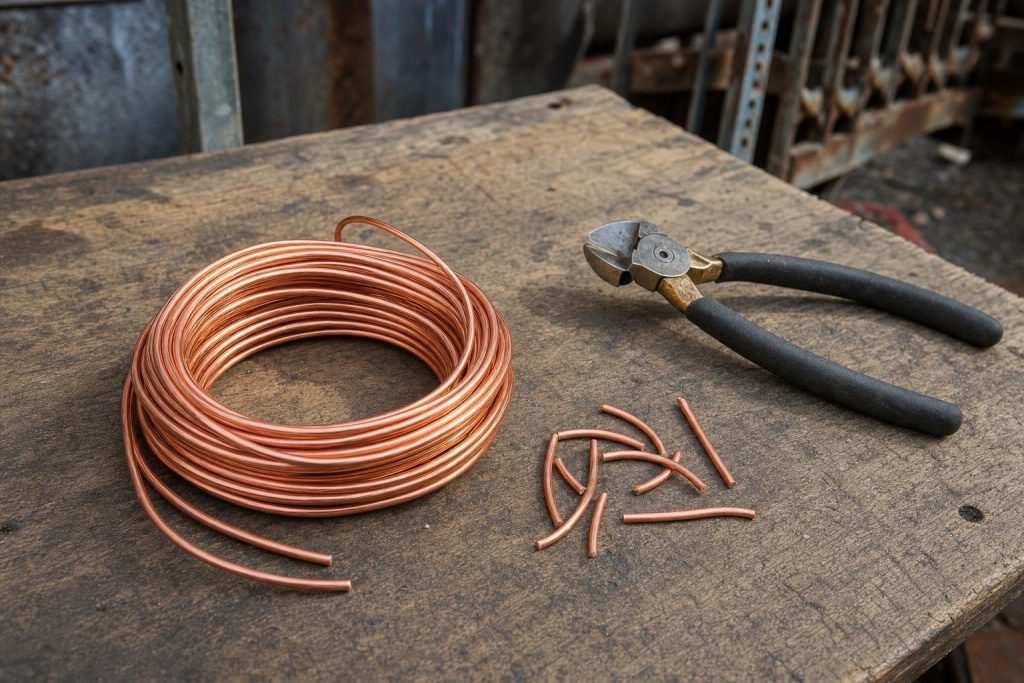
Bare bright copper is the highest grade of scrap copper. It is clean, shiny, uncoated copper wire with no insulation, no paint, no tin or solder, and no corrosion, usually about the thickness of a pencil lead or thicker. Because it is nearly pure and needs no extra processing, it pays more per pound than other copper grades.
If you are new to scrapping, this guide explains what counts as bare bright, what knocks material down to a lower grade, and how to prepare it so you get paid for the grade you actually have.
What counts as bare bright copper?
The word "bare" means there is no insulation or coating on the wire. The word "bright" means the surface is shiny, like a new penny, with no tarnish, green corrosion or burn marks. Together they describe copper that a refiner can melt down without cleaning anything off first.
A few details that matter when grading:
- Gauge: Bare bright is generally thicker wire, about 16 gauge or heavier. Thinner strands are often graded lower, such as #2 copper.
- Uncoated: No tin plating, no solder, no lacquer or paint. Tinned wire looks silver, not copper-colored, and grades separately.
- Clean: No dirt, oil, tar, rust or heavy oxidation. A light dullness from age is one thing; green crust or black burn is another.
- Mostly wire: Bare bright is wire. Pipe, tubing and sheet are different grades.
Where does bare bright copper come from?
Most of it comes from stripping insulated copper wire. If you have old house wiring, extension cords or appliance cords, the copper inside is often bare bright once you remove the jacket. It also shows up as:
- Ground wire from electrical work, when it was never insulated
- Cut-offs and leftovers from new electrical installations
- Heavy bare wire from utility or grounding jobs
- Stripped solid copper from Romex and similar building wire
Wiring jobs by electricians and contractors are the biggest source, but homeowners clearing out a garage or shed find it too.
How is bare bright different from #1 and #2 copper?
Copper is sorted into grades by purity and cleanliness. The cleaner it is, the less work the recycler does, and the more it pays. Our scrap copper page lists every grade we buy.
| Grade | What it looks like | Relative price |
|---|---|---|
| Bare bright | Shiny, uncoated wire, no insulation, 16 gauge or thicker | Highest |
| #1 copper | Clean tubing, thick wire and clean cut-offs, no fittings or heavy solder | High |
| #2 copper | Tubing or wire with some solder, paint or light oxidation, or thin wire | Lower than #1 |
| Coated or tinned copper | Silver-colored or lead-coated copper | Graded separately |
Exact prices move with the metals markets, so check today’s scrap prices to see how the grades compare right now.
What turns bare bright into a lower grade?
This is where beginners lose money. Material that looks like bare bright at first glance often has a problem that drops it a grade:
- Insulation left on: Even small bits of plastic jacket count as contamination.
- Solder or tin: Wire ends with solder blobs or tinned strands are not bare bright.
- Corrosion or burn: Green, black or crusty wire is graded lower. Never burn insulation off wire to clean it. Burning wire is illegal and releases harmful smoke, and the burned copper is worth less anyway.
- Thin gauge: Very fine wire is often #2 copper.
- Mixed metals: Brass fittings, steel clamps or aluminum strands mixed in the pile get the whole load graded down.
How do you tell copper from other metals?
Use these simple checks:
- Look at the color. Copper is reddish-orange. Brass is yellow. Aluminum is silver-gray.
- Try a magnet. Copper does not stick to a magnet. If it sticks, it is steel or copper-plated steel.
- Scratch it. A scratch through the surface should reveal bright copper underneath.
- Check the weight. Copper is noticeably heavier than aluminum of the same size.
Is it worth stripping wire to get bare bright?
Sometimes. Bare bright pays more than insulated wire, but stripping takes time. Thick wire with a lot of copper inside, such as heavy building wire, is often worth the effort. Thin cords, data cable and wire with little copper usually are not. Our insulated wire page explains the types we buy and when stripping pays. If you are unsure, sell it as insulated wire and let our staff grade it.
How to prepare bare bright copper for sale
- Keep it separate. Do not mix it with #2 copper, brass, aluminum or steel.
- Remove all insulation. Check the ends and any spots where jacket is stuck.
- Cut off solder and fittings. Trim any ends that are tinned, soldered or clamped.
- Keep it dry and clean. Wet, muddy or oily wire is harder to grade accurately.
- Bundle loosely. A box, bucket or bag makes it easy to carry and easy to inspect.
New to the process? Our article on what you need to sell scrap metal in NJ covers ID and paperwork.
Selling bare bright copper at Best Price Recycling
We buy bare bright copper at our yard in Dennisville, along with #1 and #2 copper, sheet, coated copper, insulated wire, brass, aluminum and more. Our experienced staff sort and grade your material, weigh it and pay promptly. The final price depends on how the material grades, and our rates are posted at /pricing/ and updated from the yard system.
Bring a valid state-issued photo ID, which we scan, and be at least 17 years old. You will sign that you are authorized to sell the material, and it must arrive in a vehicle with a valid license plate. Walk-ins without a vehicle cannot sell. For more detail, see our frequently asked questions.
Bring your copper to Dennisville
Best Price Recycling is at 1089 Route 47 in Dennisville, across from Wawa. We are open Monday to Friday, 8 AM to 4 PM, and no appointment is needed. Call 609-427-3800 if you are not sure how your copper will grade or have questions about what to bring.