
How to Tell Brass From Copper: 5 Simple Tests
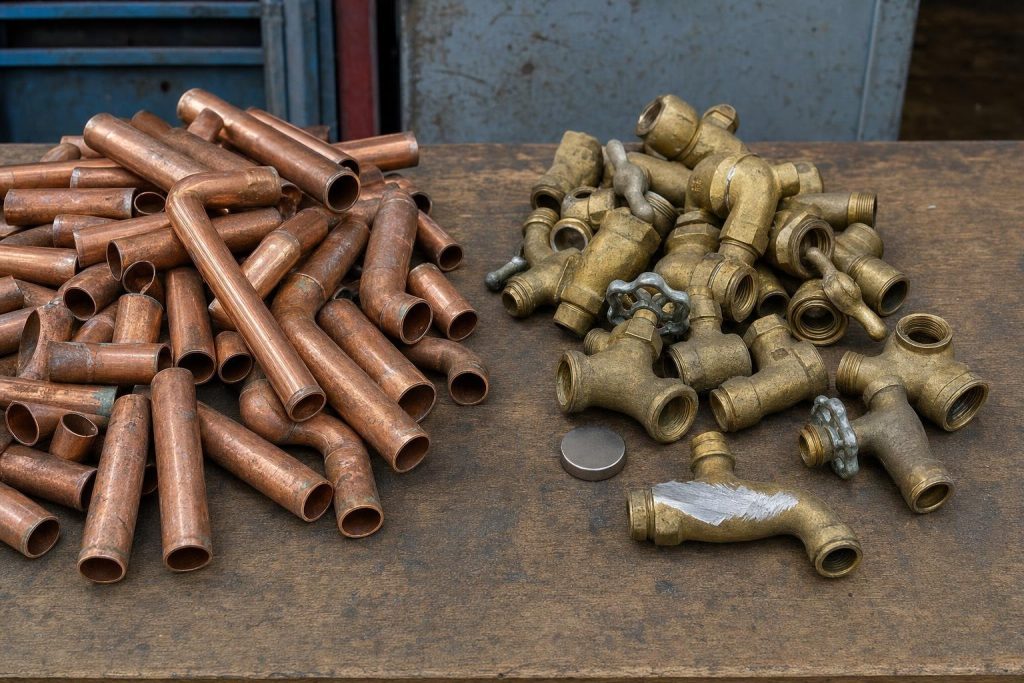
The quickest way to tell brass from copper is color: copper is a reddish-orange, like a penny, while brass is yellow, like gold. Neither one sticks to a magnet, so color, a quick scratch test, and what the part was used for are your best clues. Sorting them correctly matters because the two metals are graded and priced separately.
Brass vs. copper: what’s the difference?
Copper is a pure metal. Brass is an alloy, which means it is copper mixed with another metal, usually zinc. That zinc is what gives brass its yellow color and makes it harder and more rigid than copper. Copper is soft, bends easily, and carries electricity and heat extremely well, which is why it shows up in wire and plumbing tube.
Because they are related, they can look alike once they are dirty, tarnished, or painted. That is where most sorting mistakes happen.
Test 1: Look at the color
Check a spot that is not covered in grime. Better yet, scrape it with a knife or file a tiny patch and look at the bare metal underneath.
- Copper: reddish-orange or pinkish, like a new penny.
- Yellow brass: pale gold or yellow, like a trumpet or a brass doorknob.
- Red brass: a deeper, reddish gold. This is the one people confuse with copper most often. It has more copper in the mix, so it sits between the two in color.
Test 2: Check for tarnish and corrosion color
Old metal changes color on the surface. The color of the buildup can tell you what you have.
- Copper turns brown or dark, and with years of moisture it can develop a green-blue crust (the Statue of Liberty look).
- Brass tends to turn dull brown or dark yellow, and can also develop green or white crusty deposits around threads and joints.
Since both can go green, never judge by the crust alone. Always look at the clean metal underneath.
Test 3: Use a magnet
Hold a magnet to the piece. Neither brass nor copper is magnetic, so a magnet will not separate them from each other. What it does is rule out look-alikes. If the magnet sticks, you have steel or iron, possibly with a brass or copper plating, or a brass fitting with a steel part attached. Pull those pieces apart if you can. If there is a magnetic core in a fitting, it is not clean brass.
Test 4: Feel the weight and stiffness
Brass is generally harder and stiffer, and a brass fitting feels dense and solid in the hand. Copper is softer. A piece of copper tubing bends and kinks fairly easily, and a copper pipe can be dented with a firm tap. A brass valve or fitting will not dent the same way. Copper wire and tubing are thin-walled and flexible, while brass parts are usually thick and cast or machined.
Test 5: Think about where it came from
The job the part did is often the best clue.
| Usually copper | Usually brass |
|---|---|
| Water supply tubing (types L, M and K) | Faucets, valves and compression fittings |
| Wire with the insulation stripped | Doorknobs, keys and hinges |
| Electric motor windings | Garden hose bibs and hose ends |
| Refrigerant lines from AC and refrigeration | Plumbing unions and shutoffs |
| Sheet copper, such as flashing or roof pieces | Shell casings, lamp bases, decorative hardware |
Pipe is copper, and the fittings that join it are often brass or copper. A single plumbing job can leave you with both, so look at each piece rather than the whole pile.
Why sorting them matters for scrap
Scrap yards grade metals by type and cleanliness. Copper comes in several grades, from shiny bare bright wire to #1 and #2 tubing, and brass has its own grades, such as yellow brass and red brass. Each pays differently, and prices move with the metals markets. Copper generally pays more than brass, so mixing copper into a brass pile (or the other way around) can mean it gets graded down. You can read the grade details on our scrap copper and scrap brass pages, and see current numbers on today’s scrap prices.
How to prepare each one for the best grade
Copper
- Separate clean, bright wire and tubing from dirty or painted pieces.
- Remove solder joints, brass fittings, steel straps and any plastic if it is easy to do.
- Keep bare bright wire apart from everything else. Our guide to bare bright copper explains what qualifies.
Brass
- Keep yellow brass and red brass apart when you can tell them apart.
- Take off any steel, rubber, plastic or other attachments. A faucet with a lot of steel still attached is graded lower than clean brass.
- Keep chrome-plated or heavily coated pieces in their own bucket.
Mixed pieces
Some parts are part brass and part something else, such as a brass valve with a steel handle or a copper-aluminum AC coil. If you are not sure how to sort one, bring it in. Our staff look at the material and grade it for you at the yard.
Common mistakes to avoid
- Judging by dirt. Dark, grimy copper and brass look nearly identical. Scratch a spot clean first.
- Assuming gold color means brass. Red brass can pass for copper, and clean copper can look yellow in poor light.
- Leaving iron in the pile. A magnet will find steel bolts and cores quickly.
- Mixing everything in one bucket. Even a rough sort into copper, brass and everything else helps.
- Burning insulation off wire. It is illegal and harmful. If you want to know whether stripping is worth it, see our insulated wire page.
Bring it to Best Price Recycling in Dennisville
You do not need to be certain before you come. We buy both copper and brass at 1089 Route 47 in Dennisville, across from Wawa, and our experienced staff sort, grade and weigh your material and pay promptly. The final price depends on how it grades. No appointment is needed. Plan on being at least 17, bringing a valid state-issued photo ID, and arriving in a vehicle with a valid license plate. For the full list, see our FAQ.
We are open Monday to Friday, 8 AM to 4 PM, and closed on weekends. Questions about a particular piece? Call us at 609-427-3800.